
Citrus County 72-Hour Release List Status
No official Citrus County 72-hour release feed was found during the live official-source review. The same review found no public CCSO or CoreCivic current-inmate roster that could be filtered backward for three days. The three-day page must therefore lead with a records route, not a fabricated table and not a feed from another Florida county.
The relevant local custodian is CoreCivic, which operates the Citrus County Detention Facility in Lecanto. CCSO handles arrest and other law-enforcement records but expressly directs jail-record requests to CoreCivic. A three-day request should identify the exact beginning and ending timestamps, including the weekend or holiday hours the requester wants covered.
Request Citrus County Three-Day Release Records
A date-bounded request is the closest supported route to a three-day list. It asks for records the jail already holds and avoids requiring staff to research a question or build a new database product.
- Write the interval first. State the full start date and time and the full end date and time. Specify the local time zone and include each weekend or holiday day in the range.
- Contact CoreCivic. Call the Citrus County Detention Facility at 352-527-3332 and ask for the current local method to request an existing jail release log or equivalent records.
- Name the useful fields. Ask for release date and time, release basis, booking or AR number, holds or detainers, and receiving agency or destination, if those fields are maintained.
- Narrow if needed. If the jail says no compiled log exists, seek the existing booking/release sheets for the defined period rather than demanding creation of a list.
- Verify unclear rows. Use the Citrus Clerk docket for legal authority, VINE for a named agency event, and the receiving custodian’s system after a transfer.
CoreCivic publishes no Citrus-specific online request form, price list, response time, or release-record retention rule. Ask for the current procedure before sending personal details or traveling. Broader extraction may involve costs, but no CoreCivic amount should be borrowed from the Sheriff’s separate fee schedule.
When a three-day pull returns several records, keep each booking episode separate. The same person can have more than one case or hold, and the same AR number can appear beside several charges. Count the custody-ending event only after the booking or AR number, release time, and destination align. Do not count charge lines as releases or infer a total from the number of names in the arrest publication.
What Citrus County 72-Hour Records Should Show
There is no public Citrus County table to reproduce. The practical field inventory below separates the information that can prove a jail event from the arrest-only details available on the Sheriff site.
| Requested field | How to read it |
|---|---|
| Name and booking or AR number | Links the row to one person and one custody episode; compare the date of birth when available. |
| Release date and time | Places the end of CoreCivic custody inside or outside the exact three-day interval. |
| Release basis | Distinguishes bond, recognizance, sentence completion, court action, or another recorded reason. |
| Hold or detainer | Warns that another authority may have claimed custody. |
| Receiving agency or destination | Separates community discharge from transfer to FDC, USMS, another jail, or another custodian. |
| Arrest date, offense, bond, and photo | Helps identify the arrest in the CCSO PDF but does not show a release event. |
Note: Ask what fields already exist in the jail record, since the research did not verify that every requested field is always maintained.
Citrus County Weekend Release Window
A three-day interval matters because one same-day check can miss an event from Friday, Saturday, or Sunday. Yet the research found no published CCDF release-processing schedule, weekend procedure, holiday procedure, exit door, family waiting area, or guaranteed update lag. Those details must come from the facility for the specific event.
Set the interval by timestamps, not by vague wording such as “over the weekend.” If the goal is Friday evening through Monday morning, write those exact endpoints. If a court order was entered inside the window, remember that processing may follow it. The Clerk docket proves the order and its filing date, while the jail record shows when CoreCivic custody actually ended.
For a same-day question within that wider span, use the Citrus County 24-Hour Releases page. It follows the named-person route and shows how to check a custody event without waiting for a broad record set.
Note: Exact start and end timestamps prevent a weekend request from omitting Friday-night or early-Monday release events.
Citrus County Arrest Data Quirks
The only custody-adjacent CCSO publication is the ten-day recent-arrest PDF. It lists Photo, AR number, Date, Arrest Type, Offense, Name, date of birth, and Bond. Charge rows can repeat the same AR number, so counting rows can overstate both people and events.
More important, the PDF omits custody status, release time, release reason, location, and destination. A bond value does not establish that money or surety was accepted. “PHOTO NOT AVAILABLE” concerns only the report image. A name dropping from the page normally means the arrest passed beyond its ten-day web span, not that the person left the jail.
The CCSO page directs users to FDLE for records older than thirty days but does not explain days eleven through thirty. An FDLE history is still not a CoreCivic release sheet. These gaps are why Citrus County needs a facility record and a court docket instead of a relabeled arrest report.
The official CCSO iOS listing and official Google Play listing advertise alerts, tips, reports, news, social information, and a registry feature. They do not document a jail roster, inmate lookup, booking-photo feed, or 72-hour release list. App features can change, but the live official listing must support any claimed release function.
Note: Neither a Sheriff app feature nor the ten-day arrest report substitutes for a three-day CoreCivic release record.
Route Citrus County Release Requests Correctly
The Sheriff’s online public-record form is for CCSO-held material. It can fit an arrest or incident record request, but it is not a published CoreCivic release-log form. CCSO’s own records page sends jail requests to CoreCivic, so using the wrong form can delay the three-day inquiry.
The official CCSO request form illustrates the separate Sheriff channel and should be read with that routing limit.
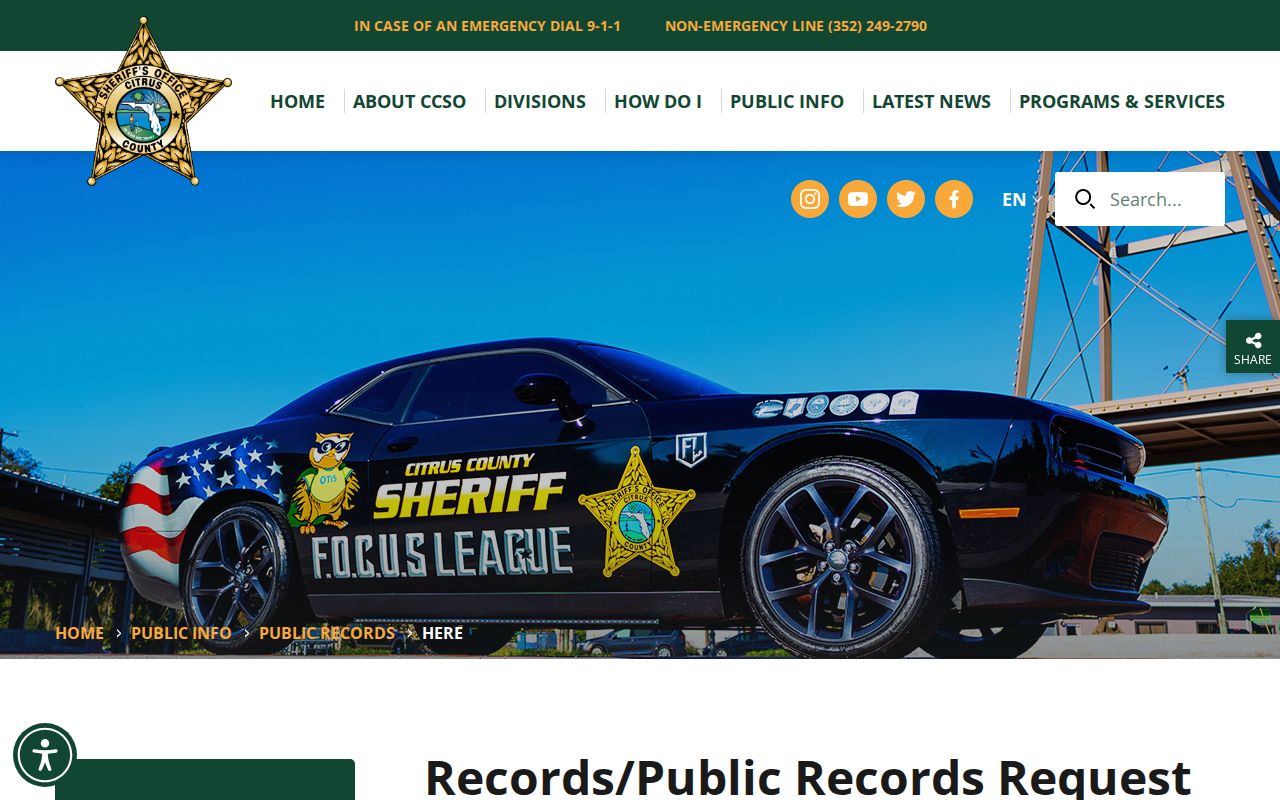
The form capture helps identify where Sheriff records are requested; it does not turn CCSO into the custodian of the jail release log.
If a request concerns a named court case, use Citrus Clerk SCORSS to read bond, disposition, sentence, jail-credit, and later orders. Some documents may be restricted, sealed, expunged, or subject to a view-on-request process. The docket can explain why release was authorized, but it cannot confirm the jail-door time or rule out another hold.
Citrus County Releases Across Custody Systems
Each row in a three-day result must be tied to the agency that stopped holding the person. A county event belongs to CoreCivic. A Florida prison release belongs to FDC. A federal detainee at CCDF may be under USMS authority and may move to BOP designation rather than to the community. These are not interchangeable release types.
County jail
Use the CoreCivic booking/release record. Add the Citrus Clerk docket for legal context and VINE for a named event.
State prison
Use FDC Inmate Release Information Search and the detailed offender history. A state record does not cover a county-only sentence.
Federal custody
Use the federal docket and facility or USMS before BOP placement. Use the BOP locator during and after a BOP commitment.
The Florida county-jail directory provides state-level context for locating official county jail channels.
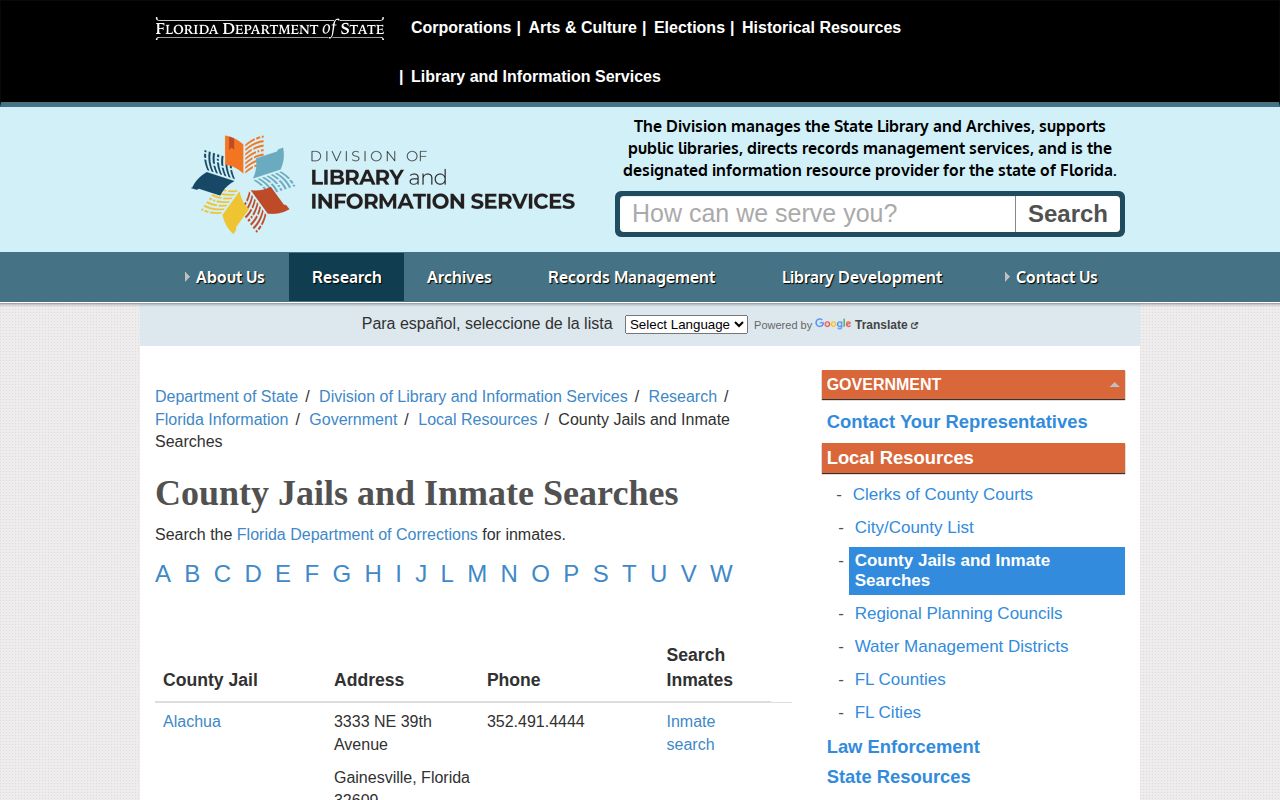
The directory image confirms the official channel context, while Citrus County’s own verified absence of a public roster still controls this inquiry.
For one person whose name or custody path is known, the Citrus County released-inmate guide connects the county, state, court, VINE, and federal channels. Keep a log of the exact status wording and check time when two systems disagree.
A useful three-day audit sorts each event into community discharge, state transfer, federal movement, other-county transfer, or unresolved destination. A bond or recognizance event may return a person to the community while the criminal case continues. A delivery to FDC or USMS ends CoreCivic custody but continues confinement. A court dismissal may explain the authority for release yet still coexist with a separate hold.
When sources conflict, use the most direct custodian for the fact in dispute. CoreCivic controls the jail event. The Clerk controls the court docket. FDC controls state-prison custody and release history. VINE reports the event supplied by its participating agency. BOP controls BOP history. Record the date and time at which each source was checked, since their update clocks need not match.
If CoreCivic reports a release inside the requested window but the Clerk order is later, confirm the case and timestamp rather than assuming either record belongs to another event. If VINE reports out of custody but the release sheet names a receiving agency, label the transfer. If no online system resolves the destination, ask for the existing receiving-agency or detainer field instead of guessing.