
Citrus County 24-Hour Release List Availability
No official Citrus County 24-hour release list was found in the July 2026 review of the live Citrus County Sheriff’s Office and CoreCivic pages. No official online current-inmate roster with a release status or release date was found either. This is a verified local absence, so a report from another Florida county cannot be substituted.
CCSO publishes a rolling ten-day arrest PDF. That file identifies recent arrest episodes, but it does not say whether a person remains at the Citrus County Detention Facility, left for the community, or transferred to another custodian. CoreCivic operates the jail, while CCSO creates the arrest report. The split in custody explains why the Sheriff publication is useful for identity clues but cannot answer who was released today.
Check Citrus County Same-Day Releases
The most direct method follows the last custodian. Start with the person’s exact identity and the date range, then ask for an existing jail record rather than asking staff to create a new list or interpret a case.
- Save the arrest clues. From the CCSO ten-day PDF, note the exact name, date of birth, AR number, arrest date, and charge rows. Do not treat the listed bond as proof of posting.
- Call the jail operator. Contact the Citrus County Detention Facility at 352-527-3332 and ask whether the named person is still held. If not, ask for the recorded date, time, release basis, and destination.
- Request the existing record. If an oral answer is unavailable, ask CoreCivic for its current local public-record submission method and seek the booking/release sheet or equivalent.
- Read the court context. Search Citrus Clerk SCORSS by name or case number for the bond entry, release order, disposition, sentence, jail credit, or later order.
- Check the next system. Use Florida VINE for a named person and FDC Offender Search if the jail record shows a state transfer. For a federal movement, use the federal docket and responsible federal custodian.
For a broad same-day request, give CoreCivic a narrow start and end time and ask for any existing release log showing the fields needed. If no compiled log exists, narrow the request to records the jail already maintains. The broader Citrus County 72-Hour Releases guide explains how to frame a three-day interval.
Keep the request purpose-neutral and precise. Florida public-record practice gives access to existing nonexempt records, but it does not require a custodian to create a report, answer a hypothetical, or calculate a new same-day total. A name, date of birth, AR number, and tight interval help staff locate the correct episode. If the facility identifies a redaction or exemption, ask for the nonexempt remainder and the basis for any withheld part.
What Citrus County Release Records Show
Because Citrus County has no public same-day release table, the useful field set comes from the release document that should be requested. The arrest PDF supplies only the identification clues in the second half of this table.
| Field | What it establishes |
|---|---|
| Identity and booking or AR number | Connects the result to one person and one arrest episode. |
| Release date and time | Shows when CoreCivic stopped holding the person for that episode. |
| Release basis or authority | Distinguishes bond, recognizance, time served, court action, or another recorded basis. |
| Hold, detainer, or receiving agency | Shows whether the event was community release or transfer into continued custody. |
| Arrest PDF fields | Photo, AR number, arrest date and type, offense, name, date of birth, and bond identify the arrest but supply no release fact. |
Note: Repeated charge rows with one AR number describe one arrest episode, not several people or several releases.
Citrus County Arrest PDF Is Not Release
The official CCSO recent-arrest page says it keeps arrest records online for ten days. On the research date, its changing PDF covered a recent ten-day span and appeared freshly generated, but CCSO did not promise a real-time or daily schedule. A person may remain in the PDF after release because the page records the arrest history. A person may vanish simply because the arrest aged out.
The PDF also omits custody status, release date and time, release reason, location, and destination. Its Photo field may say that no image is available. A listed zero or dollar bond can have several legal meanings. None proves that the bond was posted or that jail processing ended.
The page points to FDLE for records older than thirty days without explaining days eleven through thirty. That wording gap does not create a hidden release window. It makes the CoreCivic release record and the Citrus Clerk docket more important when the short web publication no longer helps with identity.
Citrus County Bond Entries and Actual Release
The Citrus Clerk bond guide explains two different bond paths. A cash bond places the full amount on deposit. A surety bond uses a bond agency guarantee and is commonly backed by collateral or a percentage payment. The amount printed in the Sheriff’s arrest report shows neither path was completed.
Use the Clerk docket to see the legal bond entry and later court action. Then use CoreCivic’s release record for the time custody ended and for any hold or transfer. The Clerk also explains that a cash-bond refund follows final disposition and a judicial order and may be reduced by lawful unpaid case obligations. A refund question is therefore separate from proof that the person walked out of the jail.
Note: A court order can authorize release before jail staff complete identity checks, hold review, paperwork, and the recorded custody change.
Transportation After Citrus County Discharge
Florida law supplies a narrow point that may matter after some county sentences. Section 951.04 says a county prisoner discharged after serving the sentence, pardon, or parole shall receive transportation or its money equivalent back to the place from which sentenced. The research did not establish how CCDF carries out that duty, what transport form it uses, or where a ride would begin.
The official Florida statute page shows the rule that should guide a question to the facility. Ask CCDF how the provision applies to the particular discharge before making pickup plans. Citrus County Transit serves Lecanto, but no official source verified a stop at the jail.
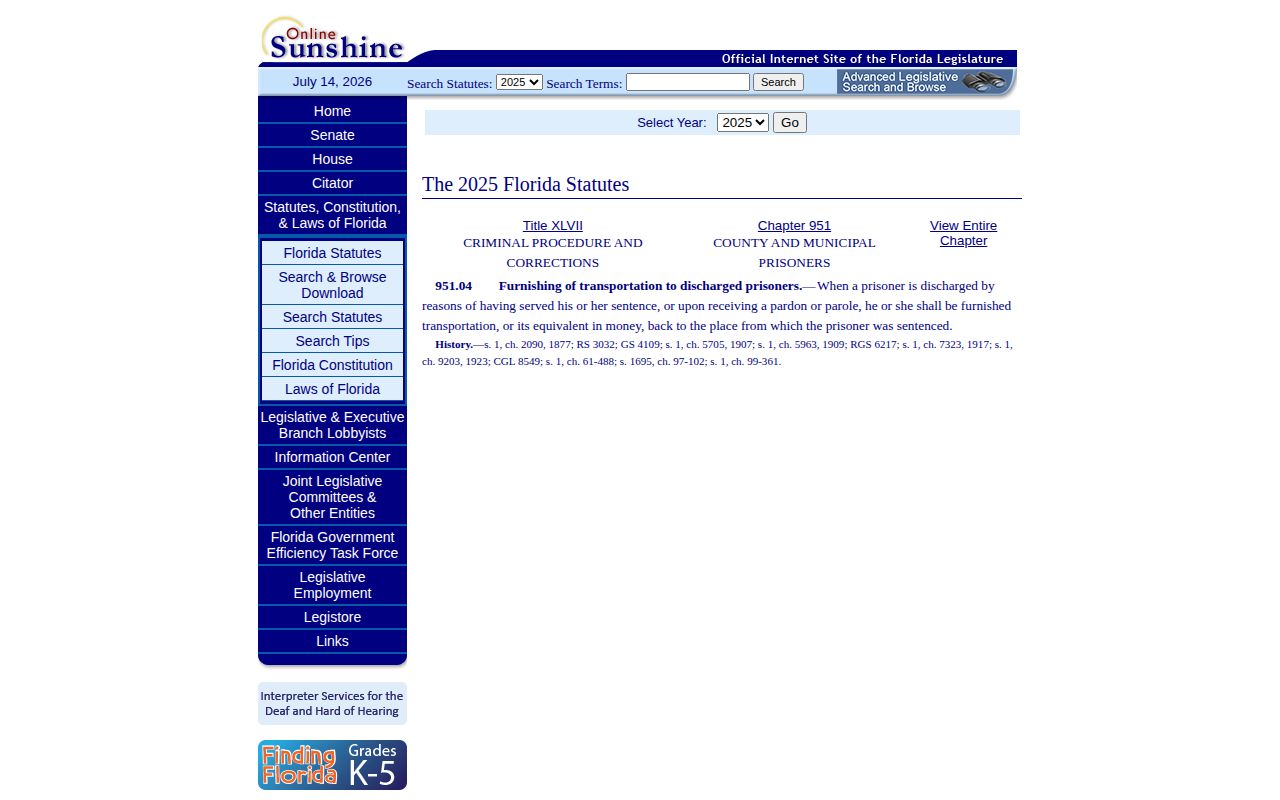
The statute image documents the legal text, not a local bus route, release door, or promised ride.
Citrus Sheriff App Lacks Release Feed
The official CCSO mobile app exists, but its public store descriptions cover alerts, tips, public-safety news, reporting, and social information. A version note refers to a sex-offender feed. Neither store description documents an inmate lookup, current jail roster, same-day release list, or booking-photo feed.
The official CCSO iOS listing and official Google Play listing are useful for checking the features the agency currently advertises. App functions can change, so read the live listings before relying on them.
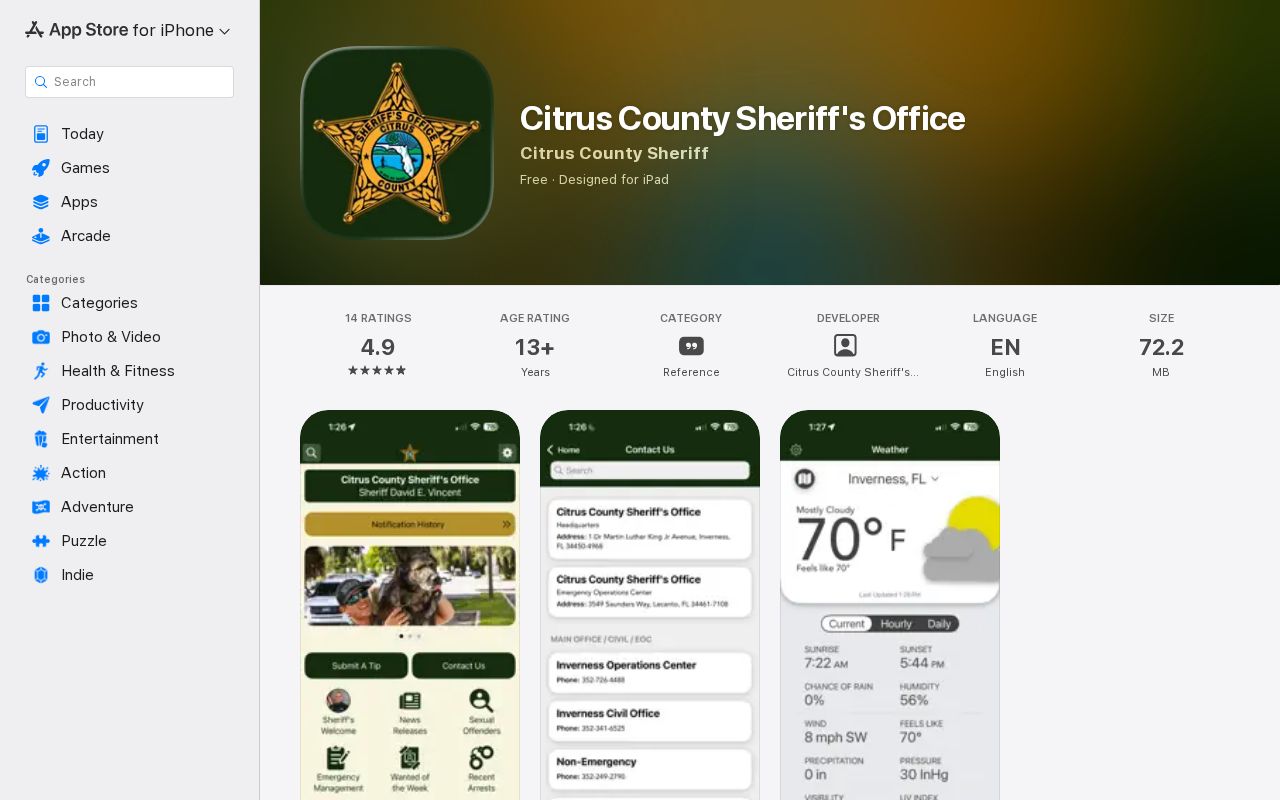
The captured listing supports the app limitation and should not be read as evidence of a hidden release tool.
Note: An app alert or registry feature should never be relabeled as a Citrus County jail release or custody-status feed.
Citrus County Release and Transfer Boundaries
A release ends one agency’s custody. It does not always mean a person returned to the community. A CoreCivic record may show bond or recognizance release, completion of a county term, delivery to FDC, movement under USMS authority, transfer to another jail, or another destination. The receiving-agency field is as important as the date.
Conflicting timestamps do not always mean one source is wrong. A judge may sign an order before the Clerk posts it, CoreCivic may complete release processing later, and VINE may receive an event on its own feed cycle. Write down the exact status, agency, and check time. Prefer the facility’s actual release document over disappearance from a web publication, and prefer an actual event over a projected date.
If CoreCivic says the person was released while VINE still shows custody, ask the facility for the recorded time and destination, then recheck VINE. If the Sheriff PDF still lists the arrest, leave it in its proper role as a ten-day arrest history. If FDC later shows custody, the county event may have been a state transfer rather than a community discharge.
For county custody, rely on the CoreCivic facility record and use the Clerk docket for legal context. For a Florida prison commitment, switch to FDC’s offender and inmate-release searches. For federal custody, use the federal docket and facility or USMS before BOP designation, then use the BOP locator when the person is in that system. Florida VINE crosses participating county and state agencies, but it is a notification layer rather than a certified jail release record.
Readers looking for one known person rather than all same-day departures can follow the full Citrus County released-inmate search path. In all paths, compare date of birth, AR or offender number, case, agency, and event time before joining records.